White Onion: A Clean Display Font for Small Business Branding
As a small business owner, I’ve learned that every visual detail—from the texture of my product labels to the spacing in my Instagram captions—shapes how customers perceive my brand. That’s why choosing the right display font isn’t just about aesthetics—it’s about consistency, clarity, and quiet confidence. White Onion is one of those rare typefaces that delivers all three without demanding extra design time or technical expertise.
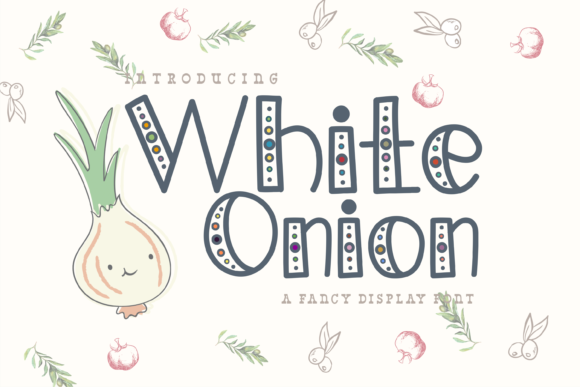
White Onion is a clean, chic display font with subtle curves, balanced proportions, and an airy, uncluttered presence. It’s not overly decorative—but it’s never plain. Think of it as the kind of typeface you’d choose for a boutique café menu or a handmade soap label: friendly enough to feel approachable, refined enough to signal care and craftsmanship. Its personality sits comfortably between modern and timeless—neither trendy nor dated, which means your branding stays relevant longer.
I first used White Onion on my small-batch candle line’s product labels. Before switching, I’d cycled through several script fonts that looked lovely in mockups but became illegible at 12pt on a 2-inch sticker. White Onion solved that instantly. Its letterforms hold their shape even at smaller sizes, especially on matte paper or kraft packaging. On digital screens—whether it’s a mobile-optimized website banner or a Pinterest pin—the font remains crisp and legible without needing heavy tracking adjustments or manual kerning.
Here’s where White Onion works hardest for real businesses:
- Logos & wordmarks: Use it solo for a minimalist logo (e.g., “Haven & Co.” on a ceramic mug) or pair it with a neutral sans serif for contrast.
- Packaging & product labels: Its clean lines complement natural materials like linen tags, recycled paper, or frosted glass bottles.
- Social media graphics: Stand out in crowded feeds—especially on Instagram Stories or Reels thumbnails—without competing with background imagery.
- Menus & signage: A local café owner friend uses White Onion for her chalkboard-style menu headers, then switches to a simple sans serif for prices and descriptions.
- Thank-you cards & stickers: Adds warmth to handwritten-style notes without looking like handwriting—ideal if you want polish but not pretension.
What makes White Onion especially practical is how easily it integrates into existing brand systems. It’s designed to be a headline or accent font, not your body text. That means you can keep your website paragraphs in a highly readable sans serif (like Inter or Open Sans), use White Onion only for section titles and callouts, and still create strong visual hierarchy. For a coaching business, that might mean using White Onion for workshop names (“Clarity Circle”) while keeping client emails in a calm, accessible typeface.
Pairing White Onion thoughtfully matters more than matching perfectly. Try it with a warm, humanist sans serif (like Poppins or Lato) for digital assets—or a gentle serif (like Merriweather or Cormorant Garamond) for print-heavy brands like stationery shops or bookish boutiques. Avoid pairing it with other high-contrast display fonts or busy scripts; White Onion shines when it has room to breathe.
Before rolling it out across your entire brand, test White Onion in context—not just in a font preview, but where your customers will actually see it. Print a sample label on your exact packaging stock. Upload a mockup to your Instagram grid and scroll past it like a real user. Check how it renders on both iOS and Android devices. If you’re selling physical products, make sure the license covers commercial use on packaging, merchandise, and printed collateral. Most reputable fonts sold for creative use include clear commercial licensing—but always double-check before applying White Onion to product tags, Shopify banners, or downloadable templates you sell to clients.
For service-based businesses—like wellness coaches, freelance designers, or home organizers—White Onion adds subtle sophistication to proposals, client onboarding PDFs, and email headers. It signals intentionality without shouting. One interior designer I know uses it exclusively for project title slides (“The Oak Street Loft Refresh”) and pairs it with a soft gray sans serif for timelines and scope details. The result feels curated, not cluttered.
Small businesses don’t need dozens of fonts to look professional. Often, one well-chosen display font does more work than five mismatched ones. White Onion earns its place because it supports your message instead of overshadowing it. It doesn’t distract from your product photography, compete with your color palette, or confuse your audience with stylistic contradictions. Instead, it quietly reinforces what you already stand for: clarity, care, and consistency.
If you’re rebuilding your brand identity or launching something new, start simple: download White Onion, open your Canva or Figma file, and try it on three things you update regularly—your website hero headline, your Instagram bio highlight cover, and your most-used product label. See how it changes the tone—not just of the text, but of the whole impression. You’ll likely notice something immediate: fewer second-guesses, more alignment, and a stronger sense that your brand looks like *you*, just elevated.
Typography isn’t magic—but the right typeface can make your small business feel more intentional, more memorable, and more trusted—without changing a single product or service. White Onion is that kind of quiet upgrade.