Block Paper Font: Bold, Playful & Perfect for Handmade Labels & Printables
If you’re designing candle labels, birthday invitations, boutique tags, or printable wall art for kids’ rooms, Block Paper is the kind of display font that makes your products feel instantly cohesive, joyful, and professionally crafted — without sacrificing personality. As a maker who prints, cuts, and ships hundreds of physical goods each season, I’ve tested dozens of display fonts — and Block Paper stands out because it balances boldness with clarity, futurism with warmth, and visual impact with real-world usability.
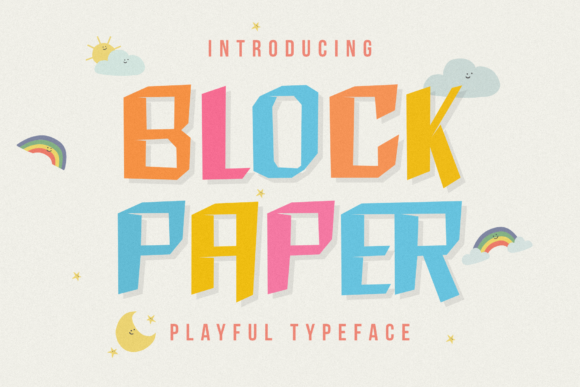
Visually, Block Paper feels like a friendly robot sketching with thick markers: clean geometric shapes, rounded corners, confident spacing, and just enough quirk to keep it from feeling sterile. It’s not overly techy or cold — there’s a handmade charm in its consistency and rhythm. That’s why it works so well on children-themed designs, but also surprises me on modern farmhouse signs, gender-neutral baby announcements, and even minimalist product packaging for organic skincare lines.
Where Block Paper Shines in Physical & Digital Products
This isn’t a font you’ll use for body text — and it shouldn’t be. Block Paper is built for display: short phrases, names, titles, decorative headings, and eye-catching focal points. Think “Welcome,” “Happy Birthday,” “Small Batch,” “Hand-Poured,” or “Made With Love.” Its generous x-height and open counters mean it remains highly legible even at 18pt on a sticker or 24pt on a kraft paper tag.
For Cricut and Silhouette users: Block Paper cuts cleanly at sizes 30pt and up on standard vinyl and cardstock. At smaller sizes (12–16pt), I recommend testing first on your specific material — especially for intricate swashes or alternate glyphs. The PUA encoding means every swash, alternate character, and stylistic ligature is accessible directly from your glyph panel in design software like Adobe Illustrator, Affinity Designer, or even Canva (with uploaded font). No hunting through layers or workarounds.
I’ve used Block Paper across dozens of real product types:
- Candle & soap labels: Paired with a light sans serif for ingredients, Block Paper gives “Lavender Dream” or “Citrus Grove” instant shelf appeal.
- Printable party kits: Birthday banners, cupcake toppers, and photo booth props pop with Block Paper’s energetic rhythm — especially when layered over watercolor backgrounds.
- SVG files for cutters: Its solid letterforms convert beautifully to vector paths, with no thin serifs or fragile joins to break during cutting.
- Wedding welcome boards & seating charts: Used selectively for names or headers, it adds contemporary charm without clashing with rustic wood or linen textures.
- Children’s planner pages & activity sheets: Kids recognize and connect with its friendly geometry — great for reward charts, weekly trackers, or “My First Journal” covers.
Pairing Block Paper Thoughtfully
Because Block Paper carries strong visual weight, pairing matters. I avoid stacking it with other bold display fonts — instead, I lean into contrast. For example:
- A soft, flowing script font (like a natural handwritten style) for names or quotes, with Block Paper handling headlines like “You’re Invited” or “Adventure Awaits.”
- A clean, neutral sans serif (think Montserrat Light or Inter Regular) for body text, pricing, or care instructions — letting Block Paper anchor the design.
- A subtle serif (such as Lora or Playfair Display) for elegant contrast on wedding stationery, where Block Paper handles playful elements (“Mr. & Mrs.” or “Cake Time!”) while the serif grounds the tone.
The key is balance: let Block Paper do the lifting for emotion and identity, and choose supporting fonts that handle information clearly and quietly.
Practical Notes for Sellers & Creators
Block Paper comes as a premium font with full PUA-encoded access — meaning all swashes, alternates, and stylistic sets are ready to use right away. You won’t need extra plugins or complex OpenType features turned on. It supports Latin-based languages (English, Spanish, French, German, etc.) and includes standard punctuation, numerals, and basic symbols — essential for pricing, dates, and product details.
File formats typically include OTF and TTF, both compatible with major design tools and cutting machine software. Always verify your license before selling — most commercial licenses cover physical products (stickers, mugs, tote bags), digital downloads (printables, SVG bundles), and client work. If you’re bundling Block Paper into editable templates sold on Etsy or Creative Market, confirm the license permits redistribution or embedding. When in doubt, check the vendor’s terms — reputable font creators clearly state usage rights.
One thing I appreciate: Block Paper doesn’t try to be everything. It knows its role — a standout display font — and excels at it. That focus makes it easier to build consistent brand identity across product lines. Whether your shop leans whimsical, modern, or earthy-minimalist, Block Paper adapts without losing its voice.
It’s also surprisingly versatile across seasons. I’ve used it for spring garden party invites (“Grow Wild”), summer camp printables (“Splash Zone”), cozy fall tags (“Pumpkin Spice & Everything Nice”), and even sleek holiday packaging (“Joy Delivered”). Its futuristic edge keeps it from feeling dated — and its rounded friendliness keeps it from feeling alienating.
If you're refreshing your design toolkit this season, consider Block Paper not just as another font — but as a quiet upgrade to your product presentation. It helps customers *feel* the care behind your craft before they even read the description. And in a crowded handmade market, that emotional resonance? That’s what turns browsers into buyers — and buyers into repeat customers.